


A Discourse On Method
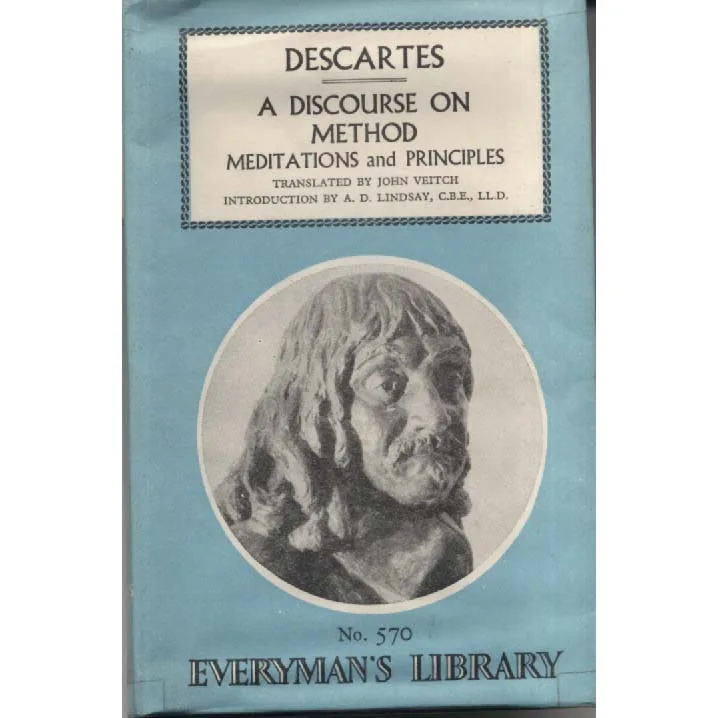
Publisher: Everymans Library
Format: Hardback
ISBN: none
A Discourse on Method (Everyman’s Library, 1965) by René Descartes
ISBN: none
Condition: Good
As sold by Crappy Old Books
Some books whisper, “Let’s think about this.” Descartes kicks the door in and says, “Right. We’re rebuilding knowledge from scratch. Put the kettle on.”
A Discourse on Method is one of those dangerous little classics: short enough to look harmless, famous enough to sound like homework, and influential enough to have quietly rewired the modern world while you weren’t looking. It’s the origin story of that very modern impulse to doubt everything, test everything, and refuse to accept an idea just because it’s been sitting around for ages wearing a respectable hat.
Descartes starts with a simple premise that is either inspiring or mildly alarming depending on your temperament: most of what we believe is inherited, second-hand, or accepted out of habit. So what if we didn’t? What if we stripped our beliefs down to the studs and only rebuilt using what we can be properly sure of? It’s philosophical minimalism with a sharp edge. Declutter your mind. Keep only what sparks certainty.
And yes, this is where we get that line everyone knows — “I think, therefore I am” — the ultimate intellectual mic drop, the philosophical equivalent of checking you’re still there by poking your own brain with a stick. But the book is more than a slogan. It’s Descartes setting out a method: break problems into parts, proceed step by step, don’t rush, don’t trust vibes, and don’t assume your senses are telling you the truth just because they seem confident about it. (Your senses, it turns out, are enthusiastic interns.)
What makes it unexpectedly fun is the tone. Descartes isn’t writing like a dusty oracle; he’s writing like someone explaining his approach, trying to be clear, pragmatic, and persuasive. There’s a practical, almost managerial energy to it. If Descartes lived now, he’d have a notebook titled “Systems,” a colour-coded framework for “truth acquisition,” and a mildly irritating habit of saying things like, “Let’s interrogate our assumptions.”
This 1965 Everyman’s Library edition is perfect for the job: compact, sturdy, and quietly respectable — the sort of book you can carry, annotate, or leave on a table to imply you have a rich inner life. It’s the classic look for a classic text: you get the feeling it has been read in trains, in studies, and in moments of existential suspicion when someone has stared at their own hand and thought, “But how do I know this is real?”
Condition is Good, meaning it’s lived a bit, but it’s ready for you to doubt your entire existence with confidence and style.
Ideal for:
-
anyone who enjoys asking “but why?” until everyone leaves the room
-
people who love logic, systems, and clean mental architecture
-
readers who want to meet modern philosophy at the moment it becomes unapologetically modern
From Crappy Old Books: because sometimes you don’t need comfort. Sometimes you need a Frenchman from the 1600s calmly explaining how to dismantle reality and reassemble it in the correct order. And honestly, it’s surprisingly soothing once you get into it.
Keep browsing: See more Academic books Other books by Descartes
